
Most serious property problems don’t announce themselves with dramatic failures. They start quietly: a faint smell you can’t quite place, a hairline crack that seems purely cosmetic, or a utility bill that creeps up without any clear change in usage. These early signals are easy to dismiss because they don’t disrupt daily routines right away. Life is busy, and when the house is still functioning, it’s tempting to assume the issue will resolve itself or stay manageable.
What makes these small signs risky is how easily they blend into the background. Homeowners often normalize them, telling themselves they’ll “keep an eye on it” or deal with it later. The problem is that later usually arrives after the issue has already grown.
A major reason these problems escalate is that a home doesn’t operate as a collection of isolated parts. It functions as an interconnected system where each component affects the others. When one area begins to fail, the impact tends to ripple outward:
- Minor issues quietly strain major systemsA small moisture issue can reduce insulation performance, forcing heating and cooling systems to run longer and harder. That extra runtime increases energy usage and accelerates wear on equipment.
- Surface damage often hides deeper problemsA small exterior crack may seem harmless, but it can allow water intrusion that weakens framing, promotes rot, or creates conditions for mold—none of which are visible right away.
- Efficiency losses compound over timeAs systems struggle to compensate for underlying problems, utility costs rise gradually. Because the increase is incremental, homeowners often don’t connect it to a specific cause.
Paying attention early shifts the dynamic back in the homeowner’s favor. Instead of reacting to emergencies, homeowners can choose measured, strategic fixes that fit their budgets and schedules. Early intervention usually means simpler repairs, shorter service visits, and fewer disruptions to daily life. It also reduces the mental load that comes with worrying about what might break next or how much an unexpected repair could cost.
The sections below walk through common warning signs that signal it’s time to bring in professional help. Some are obvious, others are easy to overlook until they repeat or worsen. What connects all of them is the same pattern: small, persistent problems rarely stay small. Recognizing these signs early allows homeowners to protect not just their property, but also their comfort, energy efficiency, and long-term financial stability.
1. Persistent Moisture, Odors, or Unexplained Stains Indoors
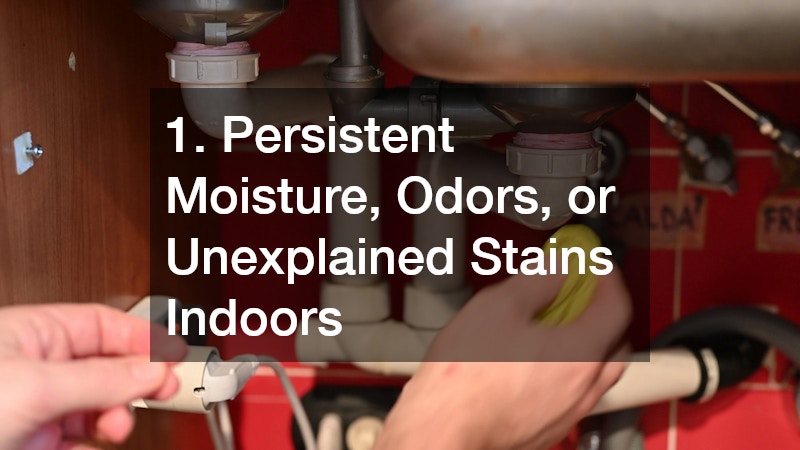
Moisture problems rarely stay contained. A dark stain on a ceiling or a musty smell in a hallway might seem cosmetic at first, but these are often early indicators of water moving through places it shouldn’t. That movement can come from slow leaks, condensation buildup, or exterior water intrusion that hasn’t yet caused visible damage. Over time, constant exposure weakens drywall, wood framing, and flooring materials while creating ideal conditions for mold growth.
Homeowners often notice:
- Paint bubbling or peeling without an obvious spill
- Floors that feel cool or damp even in dry weather
- A persistent odor that returns after cleaning
These signs tend to worsen gradually, which makes them easy to ignore. A homeowner may repaint a ceiling or run a dehumidifier, only to see the problem return months later. At first, many people try surface fixes—fans, dehumidifiers, fresh paint. While those can mask symptoms temporarily, they don’t address the source. When moisture has already penetrated walls or subfloors, a water restoration service can trace the intrusion path, dry affected materials properly, and help prevent long-term structural and energy-efficiency issues.
Ignoring these signs doesn’t just risk damage; it often leads to higher monthly utility bills as HVAC systems work harder to compensate for damp, poorly insulated spaces.
2. Slow Drains, Sewage Smells, or Yard Saturation
Few household issues feel as urgent—or as unpleasant—as problems related to wastewater. What begins as a slow sink or an occasional gurgle can escalate quietly until it affects multiple parts of the home. Odors may appear unexpectedly, or certain areas of the yard may remain wet even after days without rain.
These warning signs often point to a system that’s under strain:
- Drains slow down across multiple fixtures
- Odors appear indoors even when drains are clean
- Grass above buried lines grows faster or greener
These symptoms usually indicate that waste is not moving efficiently through the system. While it’s tempting to reach for chemical drain cleaners or assume the issue is isolated, those products rarely resolve underlying capacity problems. In properties with private waste systems, timely septic pumping can restore proper flow, reduce pressure on the system, and prevent backups that require disruptive and expensive cleanup.
When wastewater systems function efficiently, homes stay healthier, water usage remains predictable, and the risk of sudden emergencies that spike costs is greatly reduced.
3. Recurring Insects, Rodents, or Nesting Activity

Seeing a single ant or mouse doesn’t necessarily signal a crisis. Seeing them repeatedly does. Persistent pest activity almost always means there’s an underlying condition being overlooked—such as moisture, food access, or structural gaps that allow entry.
Homeowners often feel frustrated after multiple DIY attempts:
- Traps work briefly, then activity resumes
- Sprays reduce numbers but don’t eliminate the problem
- Seasonal infestations return year after year
Beyond the discomfort and inconvenience, pests can cause real damage. Rodents chew through insulation and wiring, insects compromise wood and wall cavities, and nests can obstruct airflow. All of this directly affects energy efficiency by allowing conditioned air to escape and forcing systems to run longer.
Working with pest control companies isn’t just about removal; it’s about understanding why pests are present in the first place and eliminating those conditions. That preventive approach helps maintain a tighter building envelope and more stable monthly energy usage.
4. Strong Fuel Odors or Soil Discoloration Near the Property
Some of the most serious property risks are invisible and often tied to older infrastructure. Homes built decades ago may still rely on buried fuel systems that owners rarely think about—until something smells wrong or vegetation behaves strangely.
Early red flags can include:
- A petroleum odor near the foundation
- Discolored soil or sparse vegetation
- Unexplained headaches or dizziness indoors
These signs can indicate leakage beneath the surface, even if no visible damage has appeared. Left unchecked, leaks pose environmental hazards, create safety concerns, and complicate refinancing or property sales. Professional assessment is critical, and in many cases underground oil tank removal becomes the safest and most cost-effective long-term solution.
Addressing these systems early avoids emergency remediation, which often involves extensive excavation, property disruption, and energy-intensive cleanup that can significantly increase overall household expenses.
5. Inconsistent Water Pressure or Repeated Leaks
Water systems rarely fail all at once. More often, they show signs of stress long before a major break occurs. A slow drip today or inconsistent pressure in one bathroom may point to larger system-wide issues.
Warning signs include:
- Pressure that fluctuates between rooms
- Recurrent leaks in different locations
- Sounds of water moving when fixtures are off
These symptoms often indicate corrosion, mineral buildup, or aging connections hidden inside walls. Temporary fixes may stop visible leaks, but they don’t halt deterioration. A qualified plumber can evaluate the system as a whole, identify vulnerable areas, and recommend targeted repairs that prevent future failures.
Efficient plumbing reduces water waste and lowers the energy required to heat and move water through the home—savings that accumulate steadily over time.
6. Cracking, Sinking, or Uneven Outdoor Surfaces
Outdoor surfaces offer valuable clues about what’s happening beneath them. While some cracks are cosmetic, patterns of sinking or unevenness often reflect drainage problems or soil movement below the surface.
Homeowners may notice:
- Doors or gates sticking near affected areas
- Water pooling where it didn’t before
- Gradual worsening rather than sudden damage
These issues create safety hazards and can redirect water toward the home, increasing moisture intrusion and energy loss. A local concrete contractor can determine whether the issue is limited to surface wear or if deeper structural correction is needed to restore stability and proper drainage.
Addressing these problems early helps protect foundations, insulation, and interior spaces—key components in maintaining consistent indoor temperatures.
7. Power Interruptions or Generator Failures During Emergencies
Backup power systems are often out of sight and out of mind. Many property owners assume their generators will work when needed simply because they always have in the past. Unfortunately, systems that aren’t regularly tested or maintained often fail under real demand.
Warning signs include:
- Difficulty starting during routine tests
- Unusual noises or vibration
- Power fluctuations when appliances engage
When generators don’t perform efficiently, homeowners may rely on temporary heating or cooling solutions that use more energy and offer less comfort. Scheduling local commercial generator repair ensures systems are ready when needed and operating at peak efficiency.
Reliable backup power reduces stress during outages and prevents the need for inefficient stopgap measures that can drive up utility costs.
8. Deteriorating Outdoor Living Areas and Drainage Problems
Outdoor spaces play a larger role in home performance than many homeowners realize. When surfaces shift, settle, or deteriorate, water can be redirected toward the structure instead of away from it.
Common frustrations include:
- Standing water after moderate rain
- Loose or uneven surfaces underfoot
- Materials deteriorating faster than expected
Poor drainage around patios increases moisture exposure and accelerates wear on nearby walls and foundations. Addressing these problems restores proper water flow and reduces humidity-related stress on interior systems.
Well-maintained outdoor areas don’t just improve appearance—they help protect the home’s energy efficiency by keeping moisture under control.
9. Rising Energy Bills and Uneven Indoor Temperatures

Few warning signs feel as immediate as a sudden jump in energy costs. When rooms feel unevenly heated or cooled, or systems run longer than they used to, something within the home’s balance has shifted.
Common complaints include:
- One room always colder or hotter
- Systems cycling on and off frequently
- Bills rising without lifestyle changes
These issues often stem from mechanical wear, airflow restrictions, or control problems. Professional HVAC services can identify inefficiencies, recalibrate systems, and restore consistent performance.
When systems operate efficiently, they consume less energy, maintain comfort more effectively, and experience less wear—benefits that compound month after month.
10. Visible Nests, Swarming Activity, or Structural Attachments
Wildlife activity near a structure can escalate quickly. What begins as a seasonal inconvenience can turn into a safety or structural issue if nests or swarms persist.
Homeowners often hesitate, unsure whether intervention is necessary. Signs that action is needed include:
- Nests forming near entrances or vents
- Increased activity year over year
- Damage to siding or eaves
Professional hive removal protects both occupants and the structure. Improper handling can cause repeat infestations or lead to damage that affects insulation and airflow.
Addressing these issues early prevents escalating repairs and helps maintain a tight, efficient building envelope—an important factor in long-term energy performance.
Taking Action Before Small Problems Get Expensive

Many homeowners delay repairs not because they don’t care, but because the issue feels manageable, uncertain, or inconvenient to address right now. A small drip, a strange noise, or a gradual change in comfort doesn’t always feel urgent enough to interrupt daily life. Unfortunately, building systems don’t pause their decline while decisions are deferred. Wear continues quietly, stress accumulates behind walls and under floors, and what could have been a straightforward repair slowly transforms into a more complex and costly situation.
Homes reward attention in very practical ways. When early warning signs are recognized and addressed, homeowners retain far more control over outcomes. Instead of reacting to emergencies, they’re able to make calm, informed choices that align with their priorities. That shift shows up in several meaningful ways:
- Costs become predictable instead of surprisingRepairs can be planned, compared, and budgeted for, rather than handled under pressure when something fails outright.
- Comfort stays consistent year-roundSystems operating closer to their intended efficiency provide steadier temperatures, better airflow, and fewer daily frustrations.
- Disruptions are minimizedScheduled work is far less intrusive than emergency repairs that interrupt routines or require temporary shutdowns.
Professional help isn’t about giving up responsibility or handing over decision-making power. It’s about gaining clarity. Experienced professionals can identify root causes that aren’t visible on the surface and explain realistic options before damage spreads. That insight helps homeowners prioritize what truly matters, avoid guesswork, and steer clear of repeated or ineffective fixes that waste both time and money.
By responding thoughtfully to these signals, homeowners protect far more than physical structures. They protect monthly budgets from sudden spikes, reduce the likelihood of stressful emergency disruptions, and preserve peace of mind. Instead of reacting to breakdowns, they stay one step ahead—making choices on their own terms, with confidence rather than urgency.